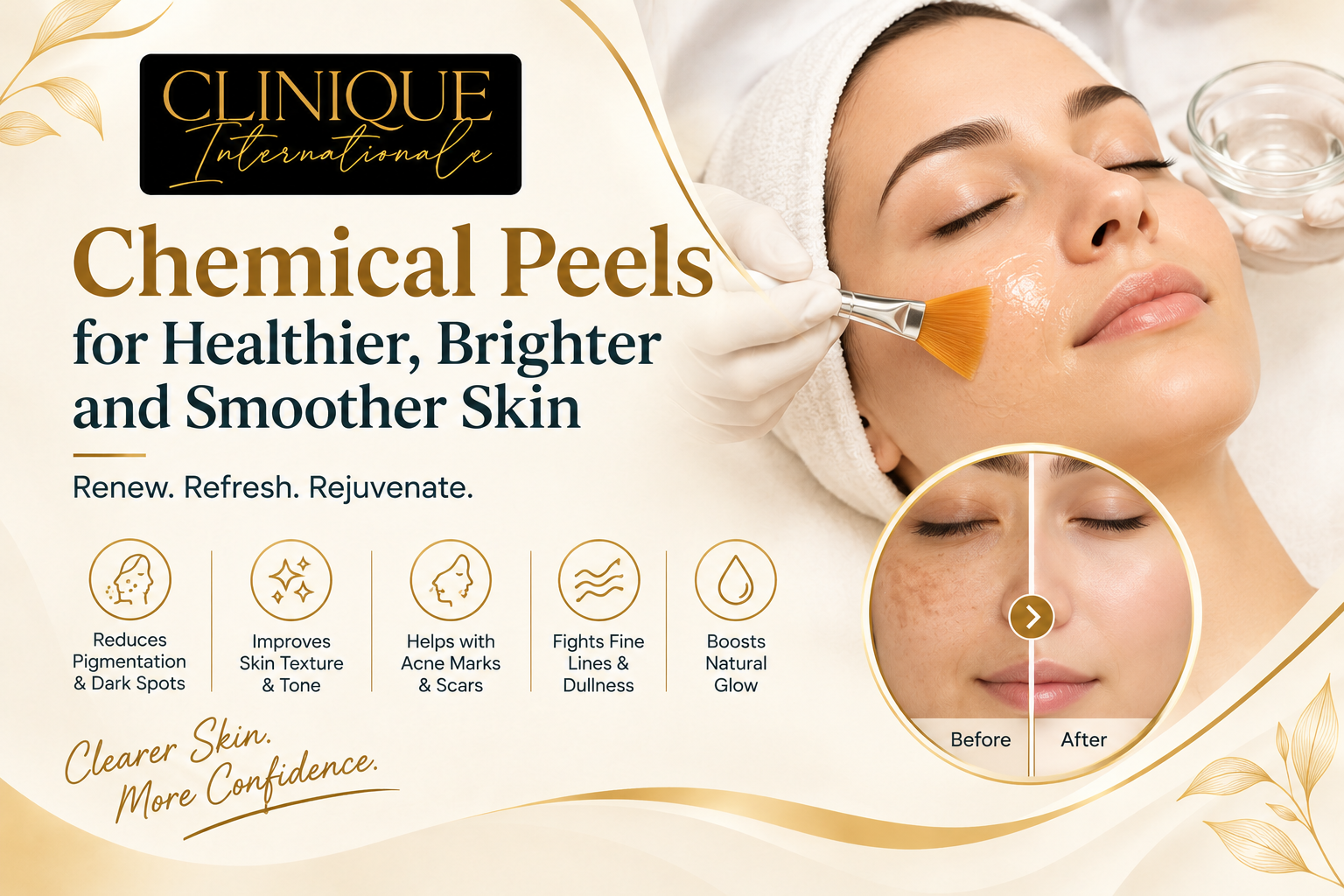

Brighter, smoother skin with a more even tone often begins with understanding your skin’s needs. Chemical Peel Treatment in Kharghar is a professional skincare option for individuals looking to improve the appearance of pigmentation, dark spots, and uneven skin tone. These concerns may develop due to sun exposure, acne marks, hormonal changes, and ageing. Following a suitable skincare routine can also help maintain a healthy-looking complexion.
A chemical peel is a professional skincare procedure that uses carefully selected acids to exfoliate the skin and encourage surface renewal. Depending on the formulation and individual skin concerns, it may help reduce the appearance of superficial pigmentation, uneven texture, and post-acne marks.
Before opting for this treatment, it is helpful to understand how the procedure works, its potential benefits, and the aftercare involved. At Cosmetic Clinique, you can explore available treatment options and discuss your skincare concerns to determine which approach may be appropriate for your skin.
What Causes Pigmentation and Dark Spots?
Melanin is the natural pigment responsible for skin colour. When melanin production or distribution changes, certain areas may appear darker than the surrounding skin.
Common contributing factors include:
- Sun exposure: Ultraviolet rays can stimulate melanin production and contribute to visible sunspots.
- Acne marks: Healing pimples may leave temporary dark marks on the skin.
- Hormonal changes: Melasma can cause brown or grey-brown patches, particularly on the cheeks and forehead.
- Ageing: Long-term sun exposure can contribute to uneven skin tone.
- Skin irritation: Appropriate skincare helps maintain the skin barrier and supports a more even-looking complexion.
How Does Chemical Peel Treatment in Kharghar Help Reduce Pigmentation?
Chemical peels work by exfoliating the skin’s surface, helping remove accumulated dead skin cells and encouraging skin renewal. Certain formulations may improve the appearance of superficial dark spots, dullness, and uneven texture.
Potential benefits include:
- Brighter-looking skin: Exfoliation can help reveal a fresher-looking complexion.
- Smoother skin texture: Appropriate chemical peels may help reduce the appearance of roughness and uneven skin.
- Fading acne marks: Selected formulations may help reduce the appearance of post-acne pigmentation.
- More even-looking skin tone: Treatment may help improve certain types of superficial discolouration.
- Personalised skincare: A professional can recommend a peel that complements your wider skincare routine.
The outcome varies based on your skin type, the underlying cause of pigmentation, and the chosen treatment.
Which Chemical Peels May Help Improve Dark Spots?
Different formulations address different skincare concerns. Your clinician can recommend an appropriate option after assessing your skin.
1. Glycolic Acid Peel
Glycolic acid, a type of alpha-hydroxy acid, helps shed dead cells from the skin’s outer surface through exfoliation.
2. Lactic Acid Peel
Lactic acid provides exfoliation and may be considered for improving mild uneven skin tone. The formulation and concentration should be selected according to your skin’s needs.
3. Salicylic Acid Peel
Salicylic acid is commonly used to control excess oil and help manage skin that is prone to acne. By supporting pore exfoliation and acne management, suitable formulations may also help improve the appearance of marks left by breakouts.
What Happens During a Chemical Peel Treatment?
If you are exploring Chemical Peel Treatment in Navi Mumbai, knowing the general process can help you feel prepared for your consultation.
- Skin assessment: Your clinician reviews your pigmentation, skin type, medical history, and skincare routine.
- Treatment selection: A suitable formulation is chosen according to your skin concerns and goals.
- Peel application: The product is applied for a controlled period according to professional guidance.
- Aftercare instructions: You receive advice on moisturising, sun protection, and resuming your regular skincare products.
Some people experience temporary redness, tingling, dryness, or peeling. Your clinician can explain the expected recovery period based on the selected treatment.
How to Maintain Your Results After a Chemical Peel
A consistent aftercare routine helps support skin comfort and maintain your skincare progress.
- Apply sunscreen: Use broad-spectrum SPF 30 or higher daily and reapply as directed.
- Moisturise regularly: Use a mild moisturiser that matches your skin’s needs.
- Follow product guidance: Ask your clinician when to resume retinoids, exfoliating acids, and other active ingredients.
- Keep your routine gentle: Allow treated skin to recover according to professional instructions.
- Attend follow-up appointments: Your clinician can review your progress and recommend suitable next steps.
Chemical Peel Treatment at Cosmetic Clinique
Every complexion has different needs, so personalised guidance is an important part of skincare planning. At Cosmetic Clinique, you can enquire about chemical peels and discuss options for pigmentation, dark spots, and uneven skin tone.
A consultation can help clarify which treatment may suit your skin, how many sessions might be considered, and what results you can realistically expect. You can also ask about the clinic’s facial scar treatment options as part of a wider discussion about your skincare goals.
Frequently Asked Questions
1. Can chemical peels help fade dark spots?
Yes, selected chemical peels may improve the appearance of superficial dark spots and uneven skin tone. Results vary according to the type and depth of pigmentation.
2. How many chemical peel sessions may be needed?
The number of sessions depends on your skin condition, treatment formulation, and response. Your clinician can recommend a suitable schedule.
3. Are chemical peels suitable for Indian skin tones?
Some chemical peels can be suitable for Indian skin tones when carefully selected and professionally supervised. Personalised assessment helps guide the treatment choice.
4. How should I care for my skin after a chemical peel?
Gentle cleansing, moisturising, daily sunscreen, and following your clinician’s instructions help support skin recovery.
5. Can chemical peels help with melasma?
Selected peels may form part of a professional melasma treatment plan. Your clinician can assess your skin and recommend an appropriate approach.