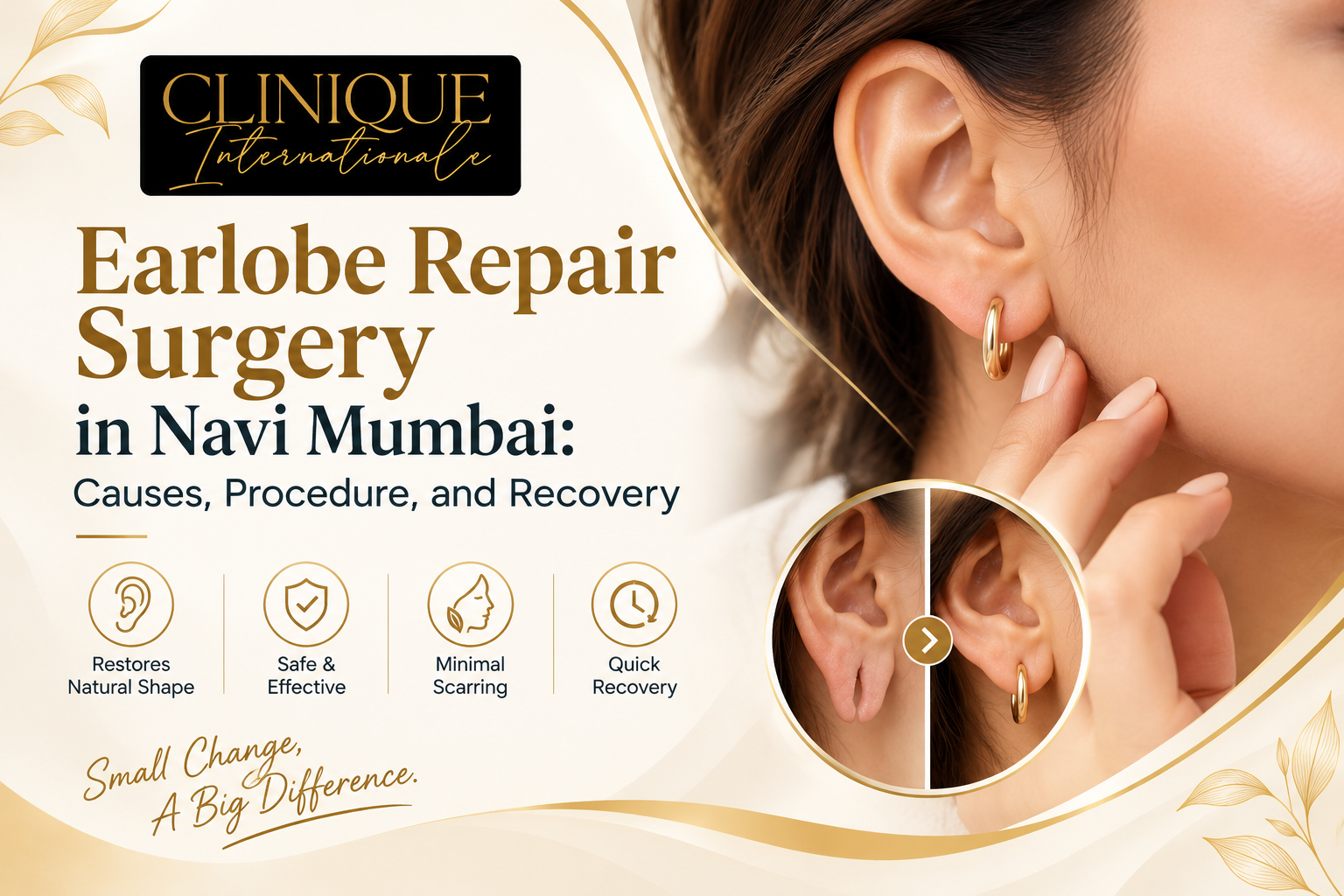

Earlobes may become loose, stretched, or torn due to heavy earrings, sudden pulling, repeated use of ear jewellery, or changes in skin elasticity over time. While these issues are generally not serious medical problems, they can affect the appearance of the ears and make wearing earrings uncomfortable. At Cosmetic Clinique, patients can consult a qualified doctor to explore treatment options and find out whether a corrective procedure may be suitable.
People seeking ear lobe repair often want to correct a damaged piercing, a split earlobe, or an opening that has gradually become larger. The treatment approach depends on the extent of the damage, the condition of the surrounding skin, any previous injuries, and the patient’s desired results. A medical consultation helps establish the most appropriate way to address the concern.
Why Do Earlobes Become Stretched or Damaged?
Earlobe damage can develop for several reasons. Identifying the contributing factor can also help prevent similar problems after the repair.
- Wearing heavy earrings: Large or heavy earrings can place continuous pressure on the piercing, gradually stretching the tissue around it.
- Sudden pulling or snagging: An earring caught on clothing, a towel, or another object may cause the earlobe to split or tear.
- Expanded piercings: Stretching a piercing to accommodate larger jewellery can leave an opening that remains enlarged even after the jewellery is removed.
- Changes with age: The skin may gradually lose firmness and elasticity, increasing the likelihood of stretching.
- Earlier injuries: Previous tears or complications involving a piercing can leave the earlobe uneven or weakened.
A doctor can assess the affected tissue and explain which treatment options may help improve its shape.
Understanding Earlobe Repair Treatment
Ear lobe repair treatment is a minor surgical procedure used to correct torn, split, stretched, or uneven earlobes. It aims to reshape the damaged area and join the tissue carefully to create a more natural-looking appearance.
At Cosmetic Clinique, patients can meet Dr. Bhavesh Gupta to discuss their concerns, understand the procedure, and review its expected benefits and possible risks. The recommended approach depends on the severity of the damage and the patient’s individual health needs.
The procedure usually involves preparing and cleaning the affected area, numbing it with local anaesthesia, and repairing the damaged tissue. In some cases, the surgeon removes a small amount of tissue before closing the wound with stitches. The precise method depends on the shape and extent of the tear.
Before treatment, patients should discuss possible scarring, expected recovery, and whether the earlobe can be pierced again in the future. Those concerned about other visible marks may also explore scar revision procedures, which are used to improve the appearance of certain scars through personalised treatment.
How Is Earlobe Repair Performed?
The process starts with a consultation in which the doctor examines the earlobe and reviews the patient’s medical history. The surgeon discusses the desired appearance, evaluates the damaged tissue, and explains the recommended repair method. Patients should mention any allergies, existing health conditions, medicines they take, or previous difficulties with wound healing.
In most cases, local anaesthesia is used to numb the treatment area. The surgeon then reshapes the damaged portion and brings the edges together using suitable stitches. The procedure is usually completed in a short visit, although the time required varies with the complexity of the repair.
Once the procedure is finished, the patient receives guidance on keeping the area clean, protecting the wound, and attending follow-up appointments. Following these instructions helps support proper healing and lowers the risk of infection or the wound reopening.
Healing and Care After Earlobe Repair
The healing process differs between individuals. Some patients may experience mild swelling, tenderness, or bruising during the first few days. Keeping the area clean and following the doctor’s advice on wound care, bathing, and prescribed medicines can help the tissue recover.
Avoid pulling or bending the ear unnecessarily, wearing earrings, or putting pressure on the repaired area until the surgeon confirms that these activities are safe. Follow-up visits allow the doctor to monitor healing and remove stitches when necessary.
Contact your healthcare provider if you notice increasing redness, worsening discomfort, unusual fluid or discharge, fever, or the wound opening again. These symptoms may require medical assessment.
Although the skin may appear healed after a few weeks, the repaired tissue can need additional time to regain strength. Do not rush to have the ear pierced again. Your surgeon can advise whether piercing is appropriate, when it may be considered, and whether a different location would be safer.
People considering cosmetic treatments should also understand that different procedures address different concerns. For instance, liposuction is used to address selected areas of excess body fat and does not treat torn or stretched earlobes.
Frequently Asked Questions
1. Will I feel pain during earlobe repair surgery?
Local anaesthesia is generally administered to numb the area during the procedure. Mild soreness or tenderness may occur afterward, and your doctor can recommend appropriate ways to manage the discomfort.
2. How much time is needed to complete an earlobe repair procedure?
Earlobe repair is usually a short procedure. The time required depends on the size of the tear, the condition of the surrounding tissue, and the surgical technique selected.
3. Does earlobe repair leave a visible mark?
A small scar may form because the damaged tissue needs to be repaired. Its visibility depends on the original injury, the surgical method, and how the skin heals. Your surgeon can explain the likely cosmetic outcome before treatment.
4. How soon can I get my ears pierced after the repair?
You should wait until the repaired tissue has healed sufficiently and your surgeon confirms that repiercing is safe. Piercing too early can put pressure on the healing area and increase the risk of another tear.
5. Who can benefit from earlobe repair surgery?
People with split piercings, torn earlobes, enlarged openings, or irregular earlobe shapes may be suitable candidates. A consultation helps determine whether surgery is appropriate based on the extent of the damage and the patient’s expectations.
