
hat scar from an old surgery, a childhood injury, or a C-section has faded over time but not enough. You have been wondering whether it is too late to do something about it, or whether you should have acted sooner. The good news is that timing matters deeply, but it is rarely ever truly too late. Understanding when to pursue surgical scar revision in Pune is one of the most important factors in achieving the best possible result.
At Cosmetic Clinique Pune, Dr. Ajinkya Patil a board-certified Maxillofacial and Craniofacial Surgeon regularly helps patients who have been living with unwanted scars for months or even years. This blog walks you through everything you need to know, from scar types and healing timelines to the right moment for revision and what recovery looks like.
What Is Surgical Scar Revision?
Surgical scar revision in Pune is a cosmetic and reconstructive procedure designed to minimise the visibility of a scar, improve its texture and colour, and help it blend more naturally with the surrounding skin. While no procedure can completely erase a scar, the right technique can reduce its appearance by 60 to 90 percent depending on the scar type, location, and your skin’s individual characteristics.
In some cases particularly when scar tissue restricts movement near a joint or distorts facial features scar revision also serves a functional purpose, not just a cosmetic one. At Cosmetic Clinique, every scar revision treatment in Pune is customised based on a thorough assessment by Dr. Ajinkya Patil before any procedure is recommended.
How Does a Scar Heal? The Three Phases
To understand the right time for scar revision, it helps to first know how a scar matures biologically. Every wound or surgical incision goes through three distinct healing phases before a scar is considered “mature.”
Phase 1 — Inflammatory Phase (Days 1–7)
Immediately after injury or surgery, the body sends blood and immune cells to the wound site. This causes redness, swelling, and warmth. Collagen production begins, but the wound is still fragile. No scar revision treatment is appropriate during this phase.
Phase 2 — Proliferative Phase (Weeks 2–6)
New tissue begins filling in the wound. Collagen is deposited rapidly but in a disorganised manner, which causes the scar to appear raised, red, or firm. Topical treatments like silicone gels and sheets can begin during this stage to encourage better scar formation.
Phase 3 — Remodelling and Maturation (Months 3–18)
The collagen fibres reorganise, and the scar gradually softens, flattens, and fades in colour. This phase can last up to 18 months. Surgical scar revision is best planned once this process is complete and the scar has fully matured.
When Is the Right Time for Scar Revision in Pune?
This is the question most patients ask and the answer depends on the type of scar and whether it is causing any functional problems. As a general rule, surgeons recommend waiting at least 12 to 18 months after the original wound or surgery before pursuing surgical scar revision.
Here is why that waiting period matters:
Scars continue to remodel naturally for up to 18 months, and some may improve significantly on their own without any intervention. Intervening too early on an immature scar can disturb active healing and lead to worse outcomes. Waiting also allows the surgeon to accurately assess the true size, shape, depth, and colour of the scar all of which determine which surgical technique will produce the best result.
That said, earlier intervention is sometimes appropriate. If a contracture scar is already limiting joint movement, or a facial scar is pulling on eyelid or lip anatomy, waiting may not be in the patient’s best interest. In such cases, Dr. Ajinkya Patil at Cosmetic Clinique Pune will evaluate whether earlier correction is necessary.
And if your scar is already several years old, it is still very much treatable. Old scar treatment in Pune produces excellent results. Fully matured scars are stable, which actually makes them predictable and often easier to work with surgically.
Common Types of Scars That Benefit From Revision
Hypertrophic Scars
Raised, red, and firm scars that remain within the boundary of the original wound. They are common after surgeries and burns. Many respond well to steroid injections or laser treatment before surgical revision becomes necessary.
Keloid Scars
Thick, lumpy scars that grow beyond the original wound margins. They are more common in individuals with darker skin tones and require careful surgical planning often combined with steroid injections to prevent recurrence after revision.
Atrophic or Depressed Scars
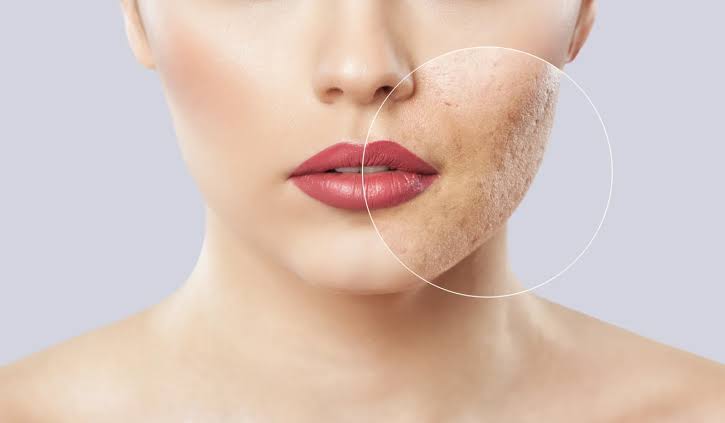
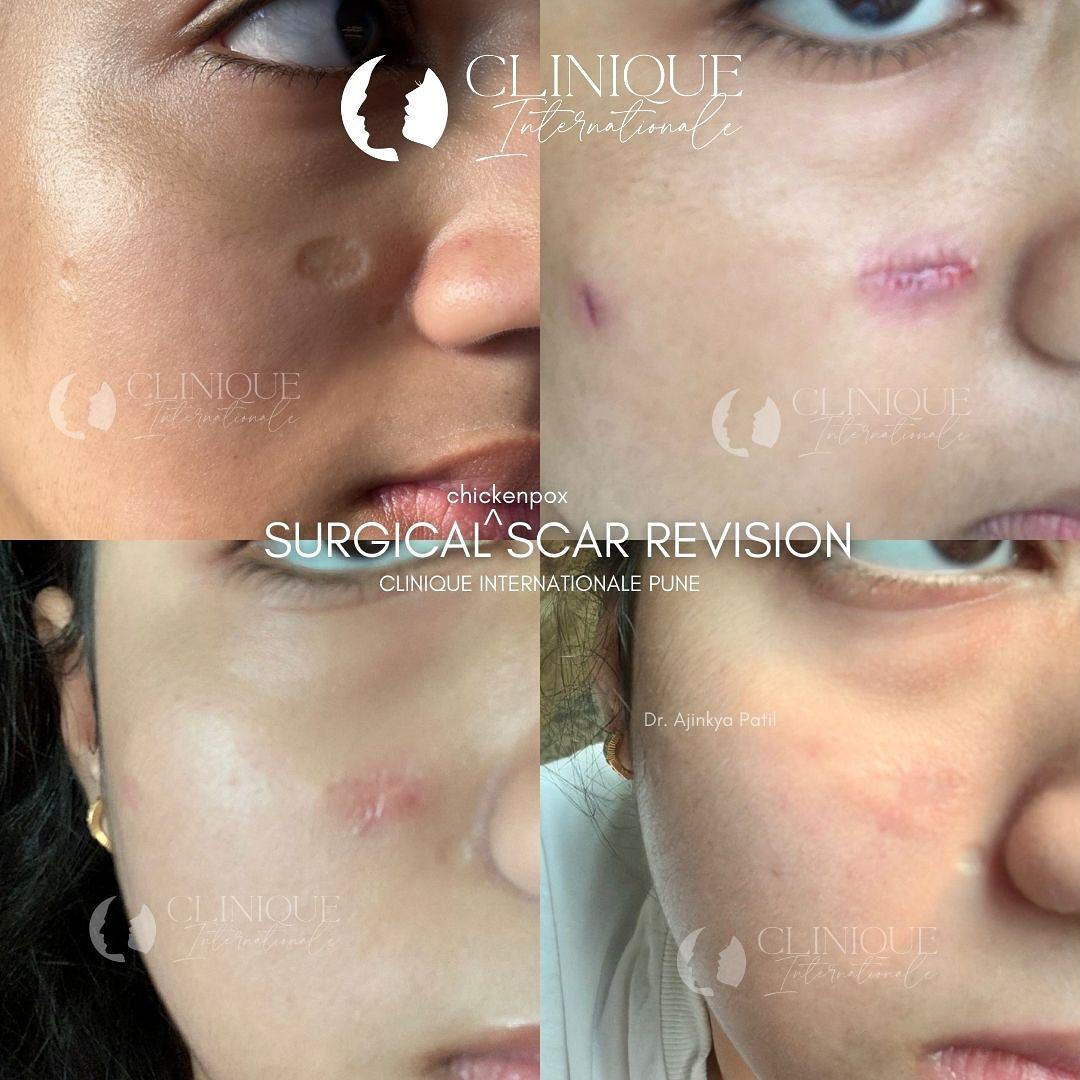
Scars that sit below the skin surface, commonly caused by acne, chickenpox, or certain surgical procedures. Depending on depth and severity, they are treated with laser resurfacing, dermal fillers, or surgical subcision.
Contracture Scars
Tight, constricting scars most often from burns or injuries across a joint that restrict movement and function. These often require earlier intervention, and Z-plasty or W-plasty techniques are commonly used in surgical correction.
Wide or Stretched Surgical Scars
Post-surgical scars that have spread or widened due to tension on the wound. Common after C-sections, abdominal surgeries, or joint procedures, these respond well to surgical excision with careful layered closure.
Are You Ready for Scar Revision? Key Signs to Look For
You may be a good candidate for surgical scar revision in Pune if your scar is at least 12 to 18 months old and has stopped changing in colour or size, if it is visibly raised, sunken, discoloured, or irregular, if it causes physical discomfort or restricts movement, and if you are in good general health with realistic expectations about what improvement not complete removal looks like.
You should wait before seeking scar revision if the scar is still red and actively changing, if you have uncontrolled diabetes, if you are currently on isotretinoin (Accutane), or if you are pregnant or breastfeeding.
Treatment Options for Scar Revision in Pune
At Cosmetic Clinique, the approach to scar revision treatment in Pune is always individualised. Dr. Ajinkya Patil assesses each case thoroughly before recommending a plan. The main treatment options available include:
Surgical Excision with Layered Closure — The scar is cut out and the wound is re-closed with precision suturing. Best for wide, linear, or irregular scars. Usually a one-time procedure.
Z-Plasty and W-Plasty — Advanced surgical techniques that reposition the scar so it falls along natural skin folds, making it far less visible. Used for contracture scars and scars that cross natural tension lines.
Laser Resurfacing — Uses focused laser energy to improve surface texture, reduce pigmentation, and stimulate new collagen. Typically requires 3 to 6 sessions. Highly effective for acne scars and post-surgical surface irregularities.
Steroid Injections — Corticosteroids are injected into hypertrophic or keloid scars to flatten and soften raised tissue. Usually administered over 3 to 5 sessions.
Dermabrasion — A controlled resurfacing technique that smooths out raised or uneven scar surfaces. Often combined with other treatments for best results.
Chemical Peels — Used to reduce mild discolouration and improve skin texture around a scar. Multiple sessions are typically needed.
Skin Grafting — Reserved for large burn scars or cases with significant tissue loss. Healthy skin is transferred from another part of the body to cover the scarred area.
In many cases, a combination of surgical and non-surgical techniques produces the best long-term results.
Recovery After Surgical Scar Revision
Most scar revision surgeries in Pune are performed as day procedures under local anaesthesia, meaning patients return home the same day. Recovery is generally straightforward.
During the first three days, mild swelling and tenderness are expected. The area should be kept clean and protected, and strenuous activity should be avoided. Between days four and ten, swelling begins to reduce and non-dissolvable sutures are typically removed around day seven. Most light daily activities can be resumed during this period.
From weeks two to six, new scar tissue is forming. Daily application of a broad-spectrum sunscreen (SPF 30+) is essential. Silicone gel or pressure sheets may be recommended. Direct sun exposure to the treated area should be avoided. From month three onwards, the revised scar gradually softens, fades, and blends with surrounding skin. Final results are typically fully visible between six and twelve months after the procedure.
Frequently Asked Questions
Can a scar be completely removed? No procedure can fully eliminate a scar. The goal of surgical scar revision in Pune is to significantly reduce visibility, improve texture and colour, and blend the scar more naturally with surrounding skin. Most patients achieve 60 to 90 percent visible improvement.
Is scar revision surgery painful? The procedure is performed under local anaesthesia, so there is no pain during surgery. Post-operative discomfort is mild and typically managed with standard pain medication. Most patients find the experience far more comfortable than expected.
How long do I need to wait before treating a surgical scar? The general recommendation is 12 to 18 months for the scar to fully mature. However, if a scar is causing functional limitation or significant distress, earlier assessment and intervention may be considered after a surgeon’s evaluation.
Is it too late to treat an old scar? Not at all. Even scars that are several years or decades old can be significantly improved through scar revision treatment in Pune. Mature scars are stable and predictable, which often makes them easier to treat effectively.
Conclusion
Living with an unwanted scar whether from surgery, an accident, a burn, or acne does not have to be permanent. Surgical scar revision in Pune offers safe, effective, and long-lasting options to improve the way your scar looks and feels. The key is approaching it at the right time, with the right technique, and under the care of an experienced cosmetic surgeon.
At Cosmetic Clinique Pune, Dr. Ajinkya Patil brings the precision of a Maxillofacial Surgeon and the aesthetic sensibility of a facial cosmetic specialist to every scar revision case. Whether your scar is 6 months old or 6 years old, the journey to clearer, smoother skin starts with a single consultation.